NICUity Blog Collection
Welcome to NICUity's Blog collection, your comprehensive resource for educational insights, updates on relevant events, and valuable materials designed to support your journey through the NICU. Explore a wealth of information aimed at empowering and informing parents, caregivers, and medical professionals alike on navigating the challenges and triumphs of neonatal intensive care.
Newborn Screening 101: Tips for Collecting the Perfect Heel Stick
Newborn Screening 101: Tips for Collecting the Perfect Heel Stick
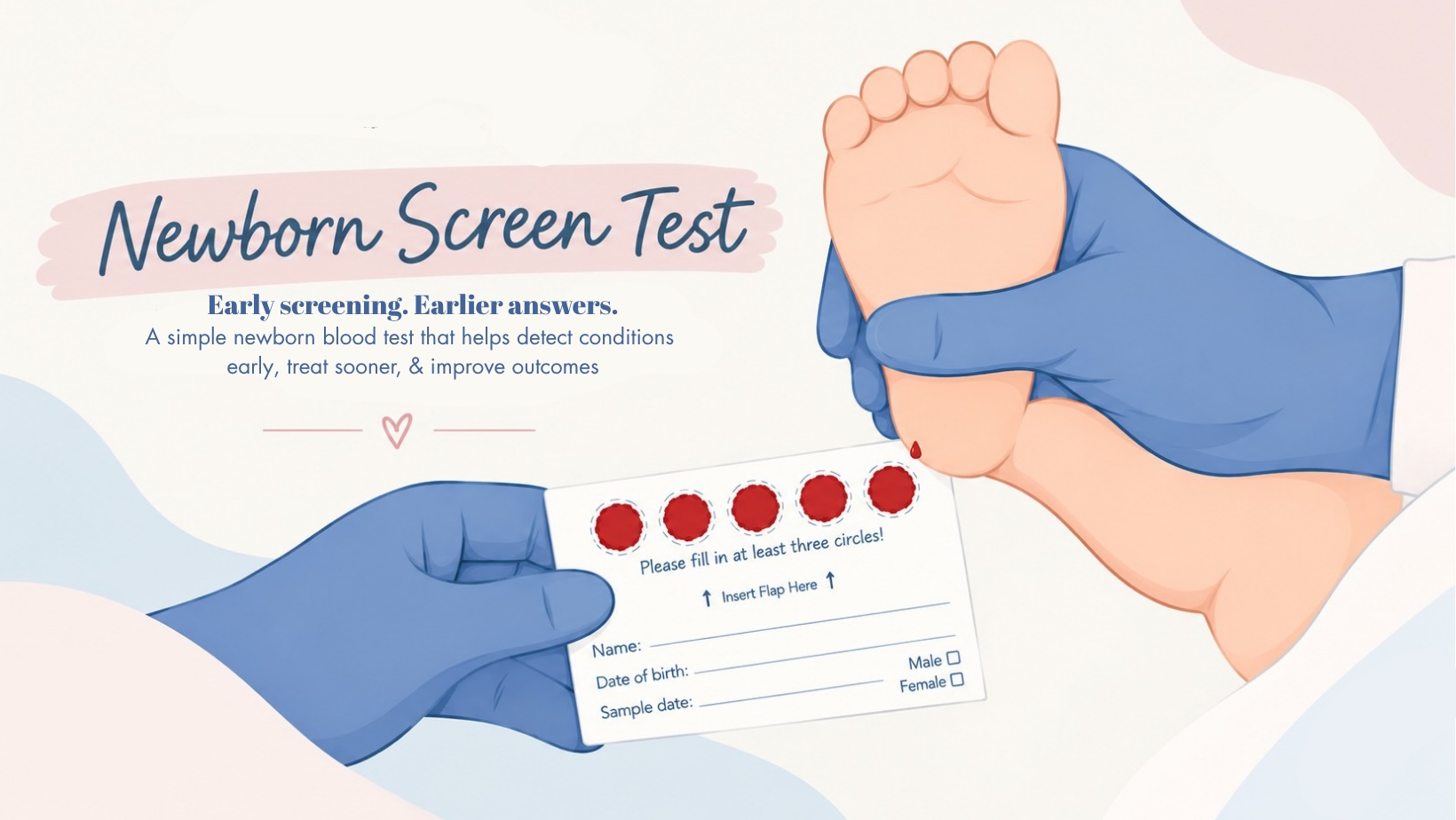
It may look like just a few drops of blood on a card, but the newborn screen can have a lifelong impact.
Newborn screening is one of those routine tasks that NICU, postpartum, nursery, and pediatric nurses perform all the time. But behind those tiny blood spots is a powerful public health program designed to identify serious conditions before a baby ever shows symptoms.
And when you’re the nurse collecting the specimen, technique matters.
Whether you’re a new NICU nurse, postpartum nurse, nursing student, or simply need a newborn screening refresher, let’s break down what newborn screening is, why we do it, and my favorite tips for getting a great specimen the first time.
What Is Newborn Screening?
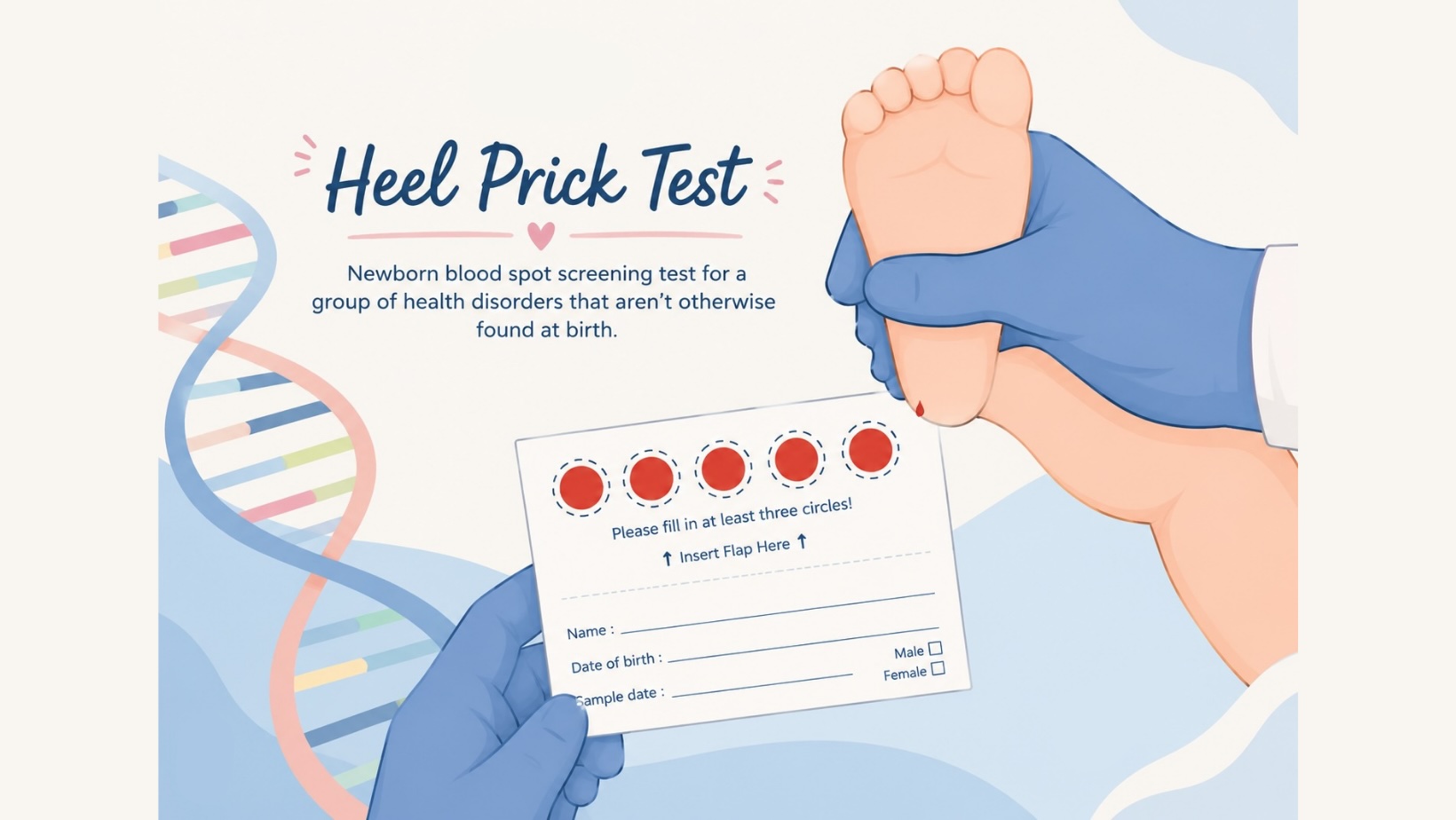
Newborn screening, often called the newborn screen (formerly PKU Test), NBS, heel stick, or blood spot screen, is a routine screening performed shortly after birth.
A few drops of blood are collected from the baby's heel and placed onto a special filter paper card. Once the blood spots have dried, the specimen is sent to a newborn screening laboratory, where it is analyzed for certain serious genetic, endocrine, metabolic, and other conditions.
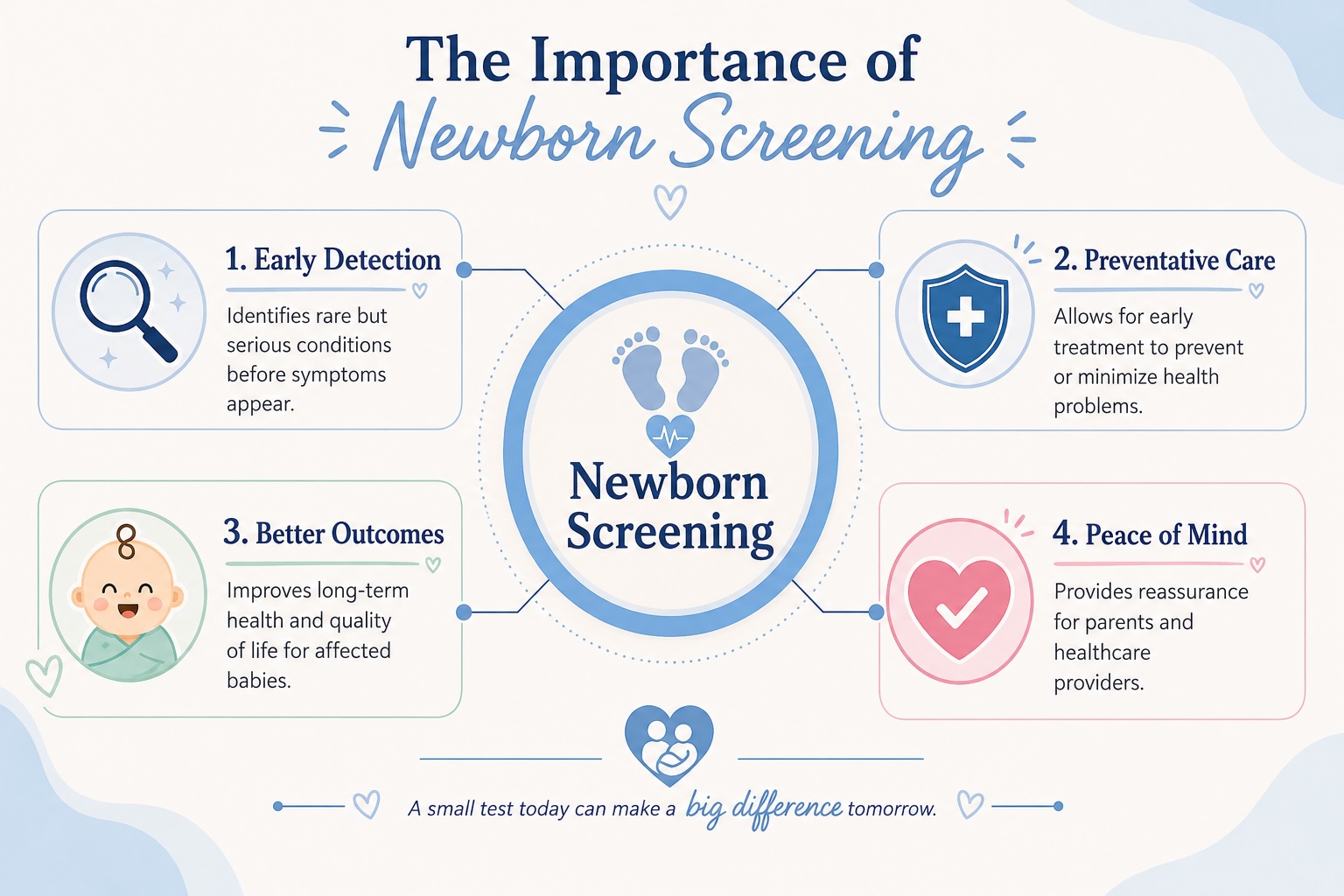
The goal is simple: find certain conditions early so treatment can begin as soon as possible.
Many babies with conditions detected through newborn screening look completely healthy at birth. Without screening, symptoms may not develop until irreversible complications have already occurred.
That is why newborn screening is such an important part of routine newborn care?
Every blood spot matters. A high-quality specimen helps the lab obtain an accurate result and may help a baby receive earlier diagnosis and treatment.
What Does the Newborn Screen Test For?
The exact conditions included in newborn screening vary by state.
Depending on where you practice (state dependent), screening may include conditions such as:
Metabolic disorders
Endocrine disorders
Hemoglobin disorders
Cystic fibrosis
Spinal muscular atrophy
Severe combined immunodeficiency
Certain genetic disorders
Other rare but serious conditions
As of 2026, the federal Recommended Uniform Screening Panel (RUSP) includes 40 core conditions and 26 secondary conditions, but each state determines its own screening panel. Most states screen for the majority of the core conditions, and some screen for additional conditions beyond the RUSP. Because screening panels and requirements vary, nurses should always follow their state newborn screening program and facility policy.
For example, California currently screens newborns for more than 80 serious genetic and congenital conditions.
You can look up your state's newborn screening program through the HRSA Newborn Screening State Resources.
When Is the Newborn Screen Collected?
Between 12 and 48 hours after birth. Timing matters!
National recommendations and individual state requirements are not necessarily identical. Blood spot screening is generally performed during the first 24 to 48 hours after birth, but nurses should always follow their state's requirements and hospital policy.
Special situations may also change the timing or require repeat screening, including:
Prematurity
Blood transfusions
Parenteral nutrition
Critically ill infants
Specimens collected earlier than the state's recommended window
Inadequate or unsatisfactory specimens
For NICU nurses in particular, knowing your facility's protocol for transfusions, TPN, transfers, and repeat specimens is important.
The Newborn Screening Process
Although protocols vary slightly between facilities and states, the basic process is straightforward:
Verify the newborn and complete the required information on the newborn screening card.
Warm the heel to encourage blood flow.
Perform a heel puncture on an appropriate site.
Allow a large drop of blood to form.
Apply the blood directly to the filter paper.
Completely fill each required circle and allow the blood to saturate through the paper.
Allow the specimen to dry completely.
Send the specimen to the designated newborn screening laboratory according to state and facility guidelines.
The heel stick itself is quick.
Getting a beautiful specimen? That takes a little technique!
Nurse Tori's Tips for a Better Newborn Screen Heel Stick
1. Gather Everything Before You Start
Nothing ruins a good heel stick faster than realizing your gauze is across the room while you have the perfect drop of blood forming.
Before starting, gather everything required by your facility, which may include:
Newborn screening collection form/card
Heel warmer(s) - use 2 warmers
Appropriate lancet(s)
Alcohol prep
Sterile gauze
Gloves
Bandage or other post-procedure supplies
Drying rack or designated drying area
Then verify the newborn's identity and make sure the information on the collection form is complete and accurate.
2. Warm That Heel
This is probably one of my favorite heel-stick tips.
A warm heel is a happy heel stick.
Gentle warming helps increase peripheral blood flow and can make obtaining those large, free-flowing drops much easier. Warm the baby's foot before collection according to your facility's policy.
I like to give the heel a few minutes to get nice and warm before I start.
And remember: gravity is your friend.
When appropriate, position the baby's foot below the level of the heart to encourage blood flow toward the heel. (elevate the head of bed if possible).
3. Know Your Heel-Stick Landmarks
Placement matters.
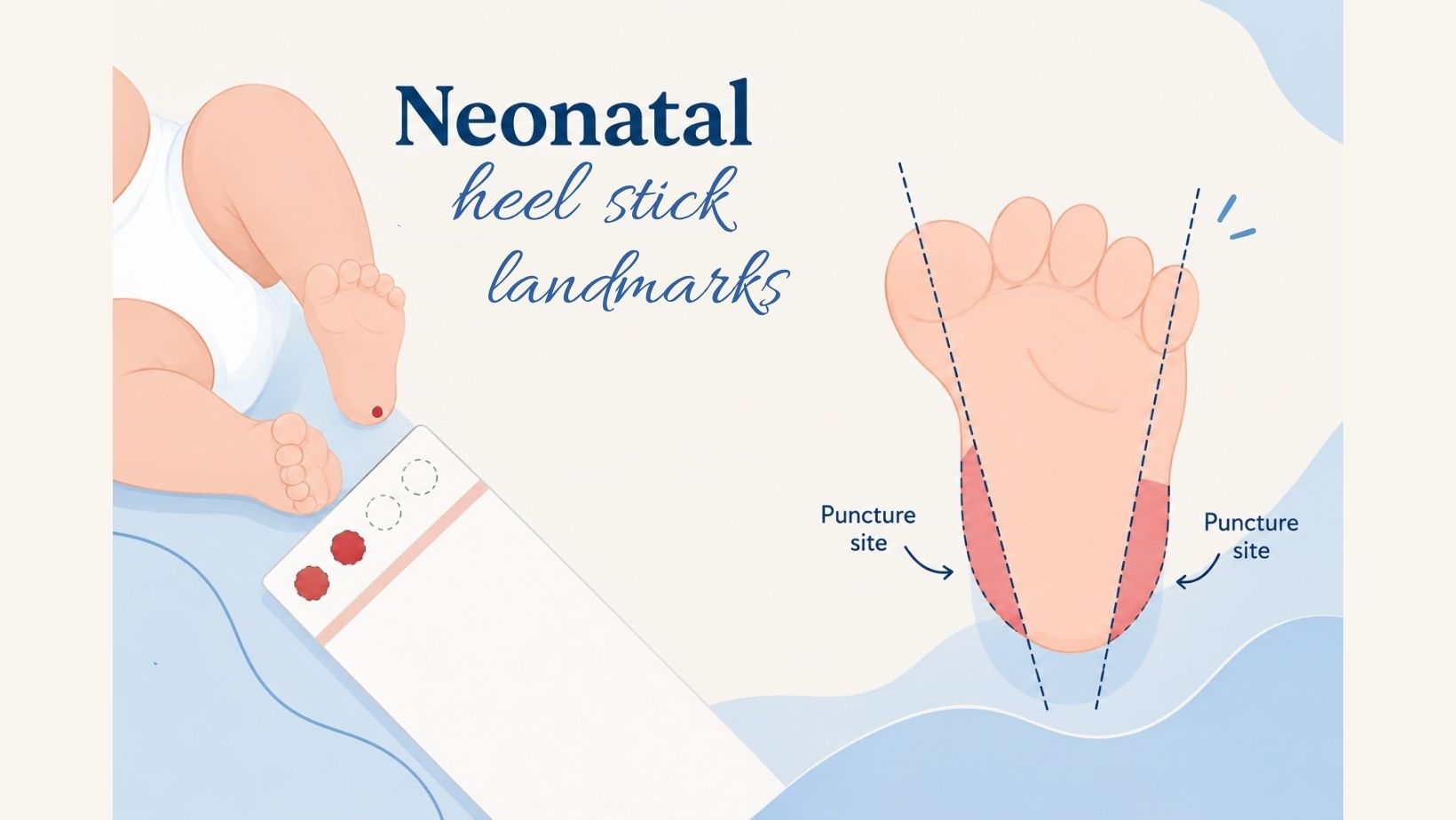
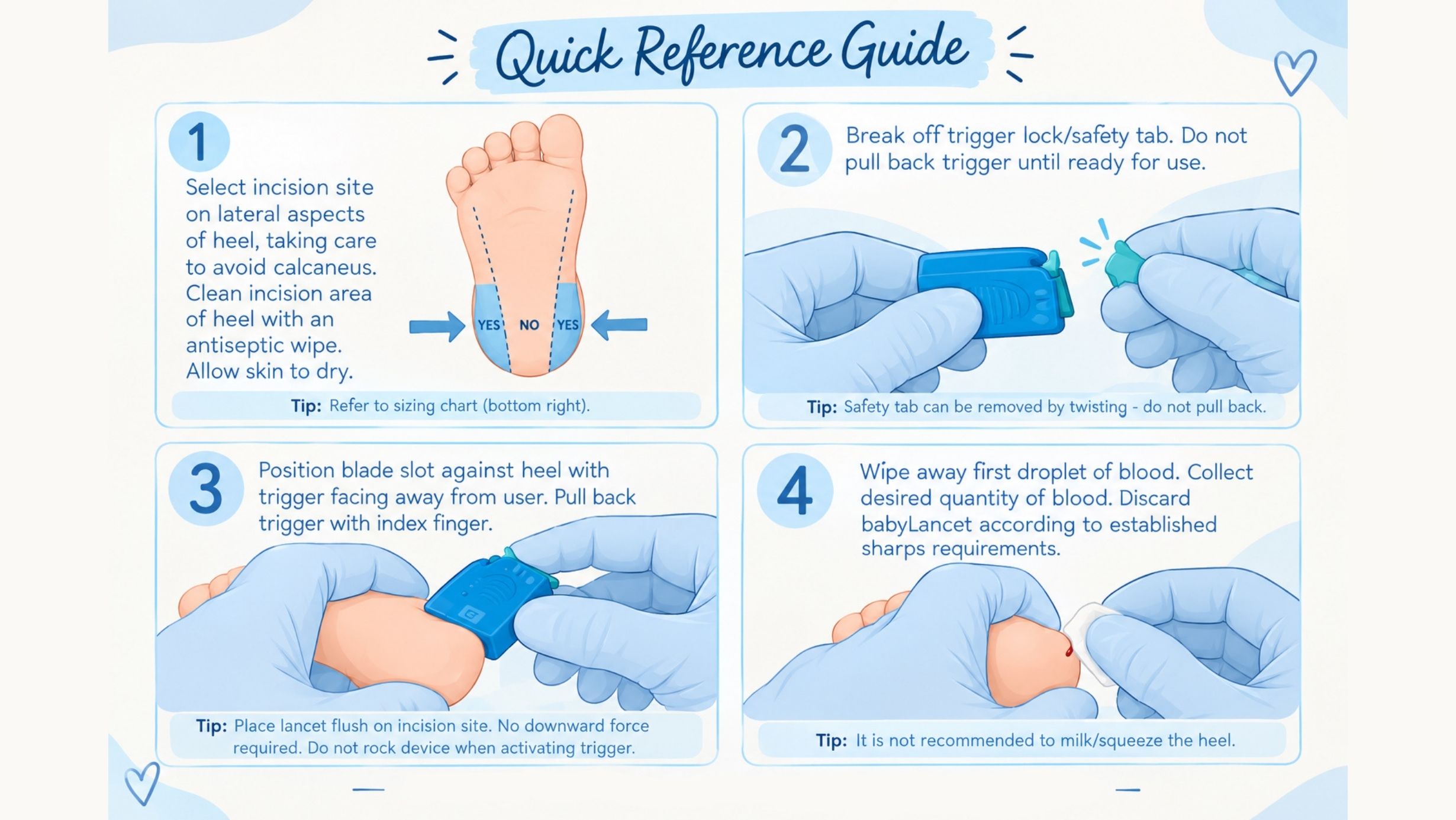
For a heel puncture, use the medial or lateral plantar surface of the heel and avoid the central portion of the heel.
Think about creating a "V" around the outside portions of the heel.
Stay on the sides, not directly in the center.
Always follow your facility's guidelines for approved lancets, puncture depth, and heel-stick sites, especially for premature or very small infants.
Tala Talks FIVE tips for a PERFECT Heel Stick - great demonstration
4. Let the Alcohol Dry
After cleaning the site, allow the alcohol to dry completely before puncturing the heel.
Residual alcohol can interfere with the specimen and may cause additional stinging for the baby.
A few extra seconds here are worth it.
5. Think: Squeeze, Squeeze, Refill
One of the biggest mistakes I see during heel sticks is continuously squeezing the foot.
Instead, think:
Squeeze. Squeeze. Relax. Refill.
Squeeze. Squeeze. Relax. Refill.
Use your thumb and forefinger to create a gentle C-shaped hold around the foot and heel.
Apply gentle pressure to encourage a drop to form, then release your pressure and allow the capillary bed to refill before applying pressure again.
You want large, free-flowing drops of blood rather than aggressively "milking" the heel.
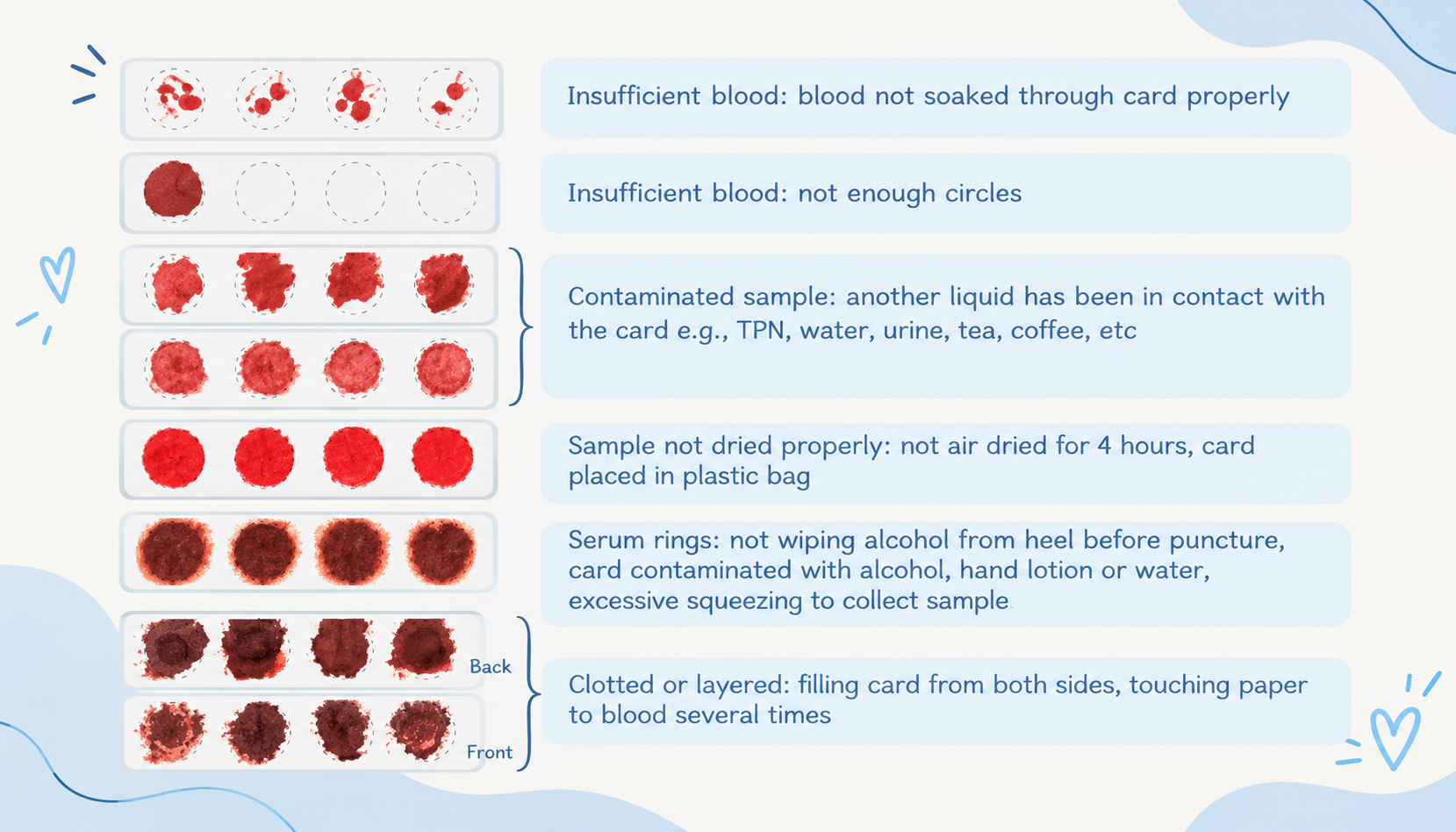
Excessive squeezing can introduce tissue fluid into the specimen and contribute to a poor-quality sample.
6. Wipe Away the First Drop
After the heel is punctured, gently wipe away the first drop of blood with clean gauze according to your collection protocol.
Then allow a large, rounded blood drop to form.
This is what you want for your filter paper.
7. Bring the Card to the Blood
Once you have a beautiful drop forming, bring the filter paper toward the drop and allow the blood to absorb naturally into the paper.
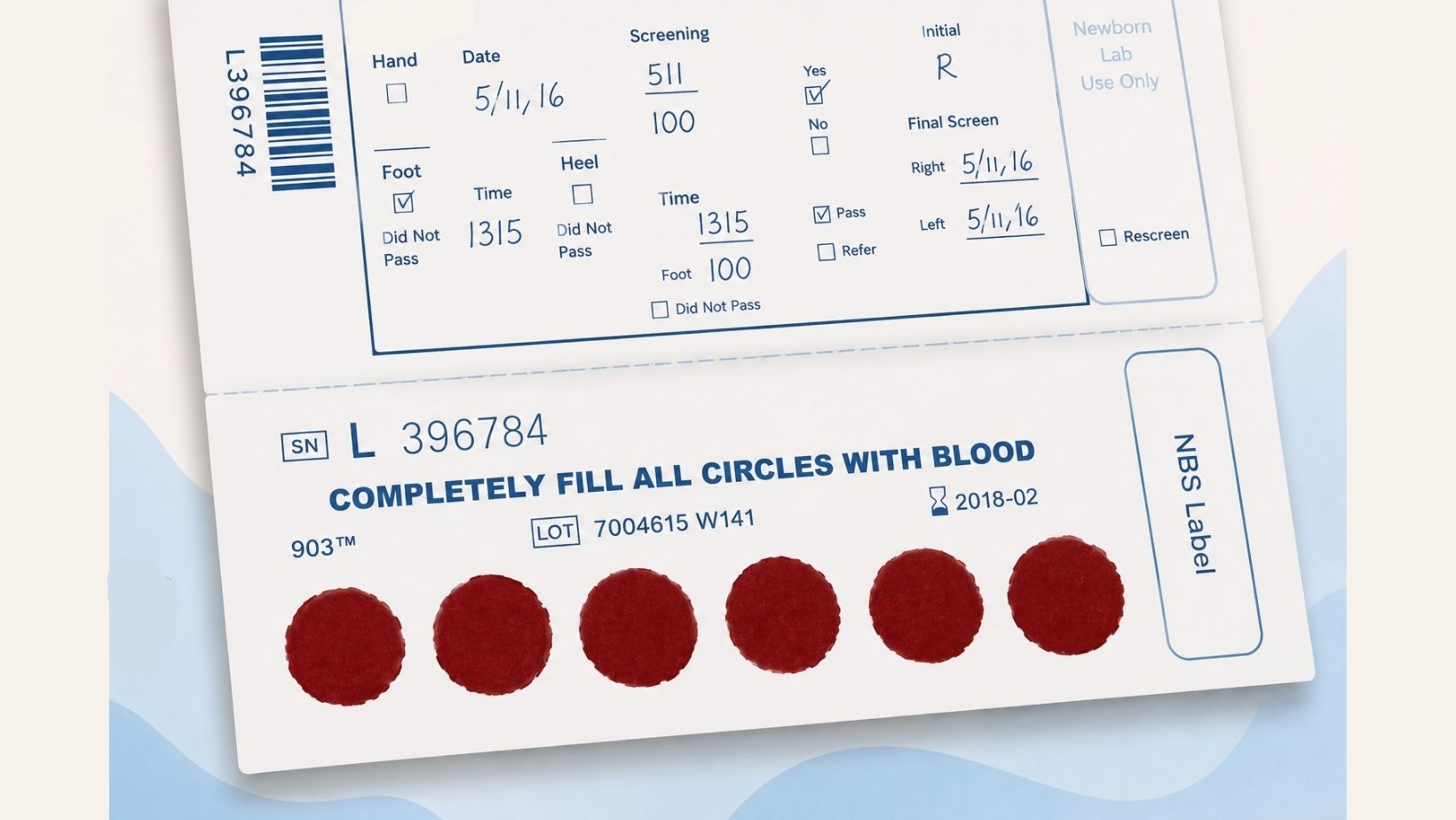
The goal is to completely fill each required circle with blood that saturates through the filter paper.
A few important reminders:
Do:
Apply blood according to the instructions on your state's collection card.
Allow each drop to soak through the filter paper.
Completely fill the required circles.
Aim for an evenly saturated blood spot.
Avoid:
Layering multiple small drops on top of one another.
Smearing the blood across the paper.
Touching the filter paper directly to the skin.
Touching the blood spots with your fingers or gloves.
Excessively squeezing or milking the heel.
Applying blood to both sides of the filter paper unless specifically directed by your screening program.
A good newborn screening specimen should look evenly saturated and soaked completely through the filter paper.
After the Heel Stick
Once you've collected the required blood spots, elevate the baby's foot and apply gentle pressure with gauze until bleeding has stopped.
Then turn your attention back to the card.
Don't touch, smear, stack, or cover those beautiful blood spots.
The specimen needs adequate time to air-dry before being packaged or transported.
For example, California instructs providers to dry newborn screening specimens horizontally for at least three hours at room temperature and to ship them to the laboratory the same day or as soon as possible.
Always follow your state's specific drying, storage, packaging, and shipping instructions.
Before sending the specimen, take one last look at your paperwork.
Is every required field completed? Is the information accurate? Are your blood spots completely saturated?
A quick final check can prevent an inadequate specimen and another heel stick for the baby.
What Happens After the Newborn Screen?
Once the dried blood spot specimen reaches the newborn screening laboratory, it is analyzed for markers associated with the conditions included on that state's screening panel.
Results are then reported according to the state's newborn screening process.
If a result is abnormal or screen-positive, it does not automatically mean the baby has the condition.
Newborn screening is a screening test, not a diagnostic test.
A screen-positive result means the baby may have an increased likelihood of a particular condition and needs additional evaluation or confirmatory testing.
Because some of these conditions require treatment quickly, abnormal results may trigger urgent communication with the baby's healthcare provider and referral for additional testing or specialty care.
Why Didn't These Conditions Show Up During Pregnancy?
This is a great question and one families may ask.
Pregnancy involves ultrasounds, bloodwork, genetic screening, and other testing designed to monitor both maternal and fetal health.
But prenatal testing and newborn screening are not looking for exactly the same things.
Many conditions included on newborn screening panels affect the way a baby's body processes nutrients, produces hormones, transports oxygen, or performs other functions after birth.
A baby with one of these conditions may:
Have completely normal prenatal ultrasounds
Grow normally throughout pregnancy
Appear healthy at delivery
Have no obvious symptoms during the first days of life
Prenatal genetic testing can identify some genetic or chromosomal conditions when specifically tested for, but it does not replace routine newborn screening.
That is the beauty of newborn screening.
We don't have to wait for a baby to look sick.
We can identify certain conditions early and connect babies and families with additional testing and treatment when it can make the biggest difference.
A Tiny Heel Stick With a Big Purpose
As nurses, newborn screening can easily become another item on our task list:
Vitals. Feed. Diaper. Assessment. Newborn screen.
But it is worth remembering what those little circles actually represent.
A properly collected newborn screen can be the first step toward identifying a serious condition in a baby who otherwise looks completely healthy.
So warm that heel.
Know your landmarks.
Let those capillaries refill.
Wait for that beautiful drop.
And fill. the. whole. circle.
Those few drops of blood may be tiny, but their impact can be enormous.
Helpful Newborn Screening Resources
For current screening recommendations and state-specific information, visit:
Nurse Tori Tip: Your state's newborn screening program and your facility policy should always be your primary guides for collection timing, specimen requirements, repeat screening, drying, and transport.
This blog is intended for educational purposes and does not replace your facility's policies, state newborn screening requirements, or clinical judgment.
Nurse Tori I Motherhood Perspective Newborn Screen I What Really Happened After Birth
Victoria (Tori) Meskin, MSN, RNC-NIC, has been a NICU nurse since 2012, caring for critically ill newborns in acute and high-acuity neonatal settings throughout Southern California. Board-certified in neonatal intensive care and experienced as a travel NICU nurse, she is also the co-founder and CEO of NICUity, a modern resource hub supporting NICU professionals and families through practical education, tools, and community. Outside of the bedside, Tori is a mom, wife, content creator, and nurse who shares the honest, relatable side of motherhood, nurse life, and entrepreneurship, offering practical tips and encouragement for healthcare providers and modern moms alike. Discover her latest resources and recommendations at www.tipsfromtori.com or reach out at [email protected].